

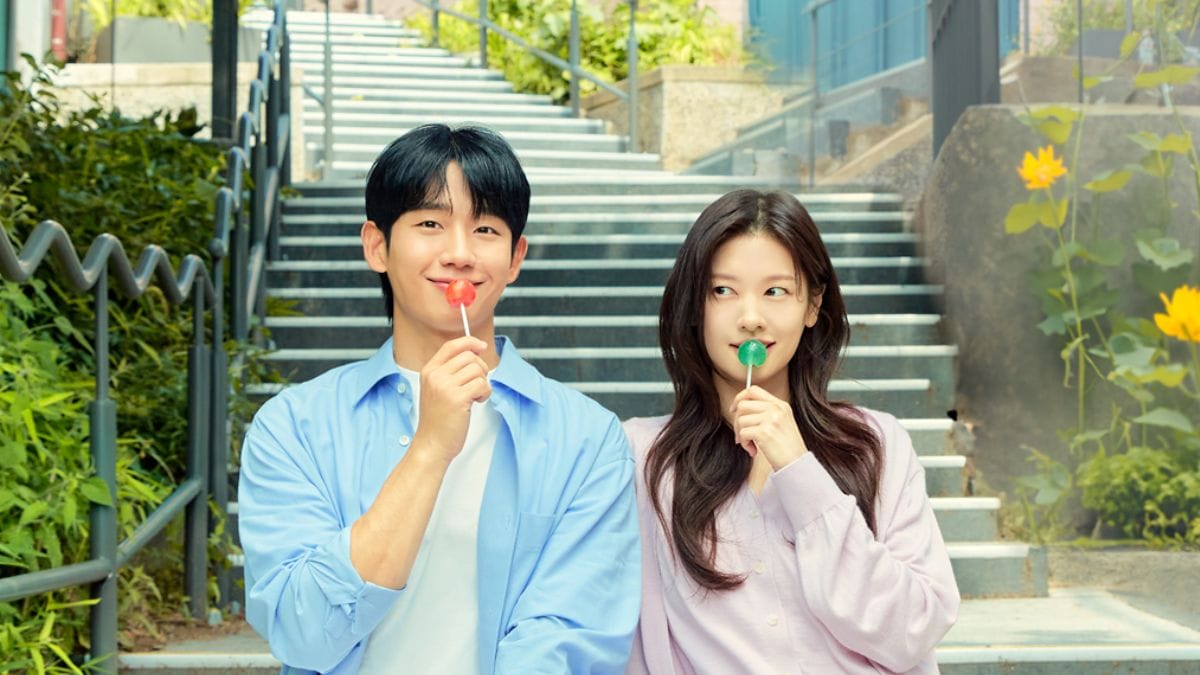
“Love Next Door” is a Korean drama series that takes on a gentler approach when it comes to romance. It is the kind of drama that appears to slow everything down — reminding us that love doesn’t always have to be loud to be real and unforgettable. Sometimes, it’s the kind of love built and grown through friendships that shows up quietly when love is ready.
Starring Jung Hae-in and Jung So-min, “Love Next Door” is one such drama. At first glance, it may seem like a simple take on the “childhood friends to lovers” trope, but beneath its familiar storyline lies a gentle introspection on what it means to love, to grow, and to start over.
A romance that unfolds in stillness

The heart of “Love Next Door” lies in the relationship between Bae Seok-ryu (Jung So-min) and Choi Seung-hyo (Jung Hae-in). As childhood neighbors, their bond is rooted in years of shared memories. They know each other’s quirks, have seen each other in the messy bits, and once walked through the awkwardness and titillation of adolescence side by side.
By the time they reconnect as adults, their friendship — with its history — creates a foundation where trust already exists. What makes this love story so compelling is precisely the quietness that settles amid the chaos. Their romance is expressed in small gestures — the ease of shared silences, the comfort of being fully seen, the reassurance that neither has to pretend. Because friendship came first, they’ve already witnessed each other at their lowest and highest points. They know the messy bits as well as the best ones. And so, when romance finally happens, it feels less like a leap into the unknown and more like a homecoming.
Chemistry that feels like old friends
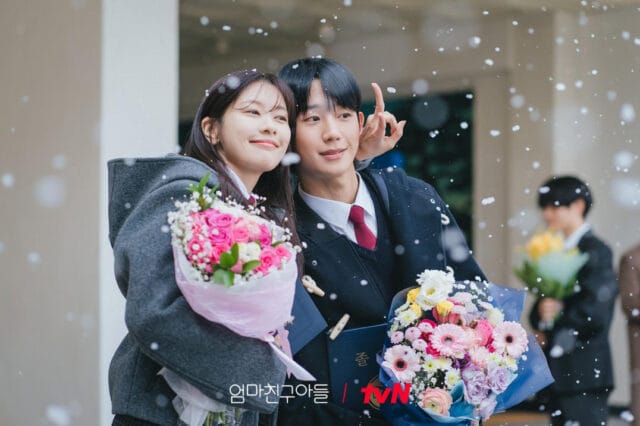
A story like “Love Next Door“ works because the chemistry between its leads feels believable — and here, it more than delivers. Jung Hae-in and Jung So-min embody their characters with a warmth and ease that makes them feel less like actors playing roles and more like two people slipping back into the rhythm of a friendship they’ve always known.
What stands out is how their dynamic captures both sides of the story. Through Seok-ryu’s eyes, we see the vulnerability of someone who is rebuilding her life, leaning on a person who once knew her better than anyone. Through Seung-hyo’s, we witness the quiet devotion of someone who has grown up alongside her, carrying an unspoken understanding rooted in their friendship. Their on-screen connection doesn’t just serve the romance — it honors both perspectives, reminding viewers that love here is the natural continuation of friendship.
The authenticity of their onscreen chemistry becomes one of the drama’s greatest strengths. By grounding the love story in the familiarity of two old friends rediscovering each other, the actors allow the romance to breathe, making it all the more tender and real.
Carrying the weight of the eldest child

While the romance is tender, the drama also digs into deeper cultural themes — particularly through Seok-ryu’s character arc. As the eldest daughter in an Asian family, she shoulders the familiar weight of being the “firstborn example”: excelling academically, achieving professionally, and upholding the family’s reputation.
For much of her life, Seok-ryu has performed this role flawlessly. A prestigious career abroad, an enviable engagement, the appearance of having everything together — she seemed to embody the script written for her. But beneath that polish lies exhaustion. Her decision to walk away from both her job and her engagement is more than a plot twist; it’s a radical act of self-definition.
In a cultural context where eldest children are often expected to sacrifice personal desires for the family, her choice resonates. It raises a powerful question: what does it mean to succeed if the cost is yourself?
The courage to begin again
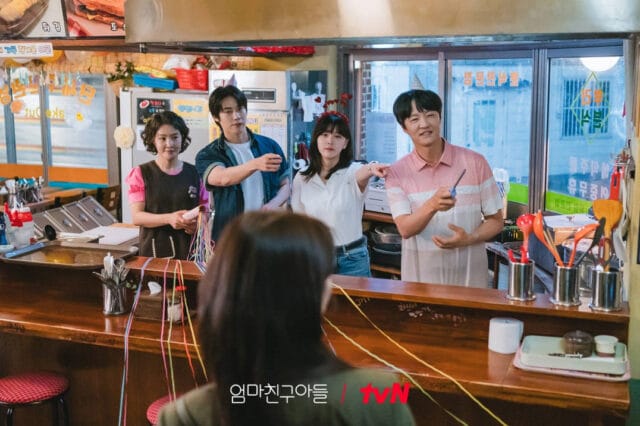
Seok-ryu’s return home isn’t framed as failure — it’s framed as freedom. For perhaps the first time, she allows herself to exist outside of performance, to stumble without shame, to redefine who she is on her own terms.
What enables this transformation is not just her own courage but the people around her. Seung-hyo, with his patient presence, offers her a space to breathe. Her best friend Jeong Mo-eum (portrayed by Kim Ji-eun), who has been with her in every phase of her life, always makes her feel seen. The drama underscores a vital truth: healing rarely happens in isolation. For Seok-ryu, healing happened when she surrounded herself with people who allowed her to fall apart and begin again.
Love that feels like coming home
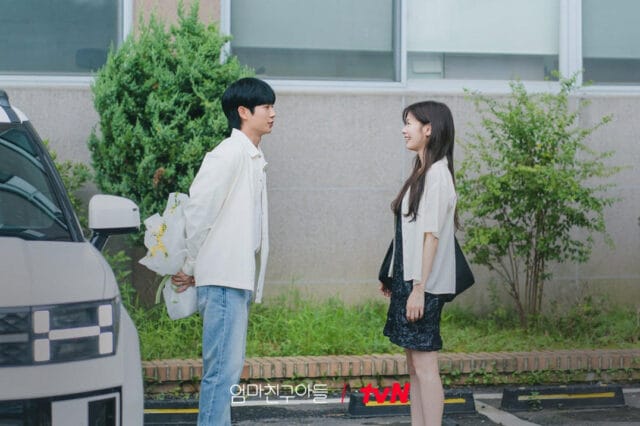
At its heart, “Love Next Door” is not about passion that burns fiercely and fades. It’s about a love that sustains. A love that feels like returning to a familiar street, a familiar voice, a familiar hand reaching out — not with urgency, but with certainty. For Seok-ryu and Seung-hyo, love isn’t about discovering someone new — it’s about recognizing what was always there, waiting to be acknowledged.
For many viewers, this resonates because it mirrors real life. Not every love story is a whirlwind. Sometimes, it looks like the friend who has seen you at your worst and still stays. Sometimes, it looks like starting over with someone who has always been there. But most of the time, love feels like home.
“Love Next Door” grounds its story in the familiarity of friendship — the series crafts a romance that feels both believable and profoundly moving. By exploring the pressures of family expectations and the courage to start over, it gives its characters depth beyond their relationship.
In the end, “Love Next Door” is not just about finding romance — it’s about finding comfort, courage, and the people who make it safe to begin again.